
General election · 3 November 2026

State Senate, District 11

2 candidates on the ballot, listed in certified ballot order.

Race type
Contested
Candidates
2
Surveys returned
1 of 2
Race receipts
$42,915
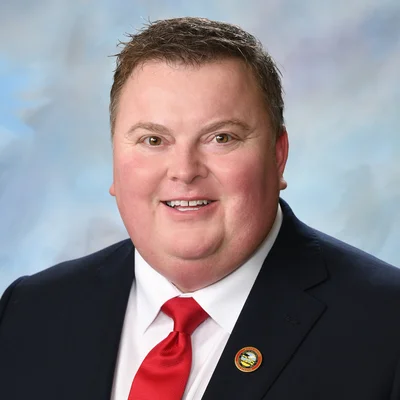
Chris Karr

Chris Karr

Sitting legislator

RepublicanBallot order 1

Where they stand on data centers

100%protective votes — 9 of 9 tracked roll calls

Stood with residents

Survey: no response recorded

The position above is drawn from roll-call votes only. This candidate has not answered the questionnaire in their own words.

Ask them to answer

Money — a signal, never a position

$32,250Total receipts reported
Matched a flag (A–D)

No itemized donors filed. That is not the same as having raised nothing.

Committee: Chris Karr For South Dakota.

A flag means a donor matched a category. It is not a finding that anything improper happened.

How to reach them

Share this card

Aaron Matson

Not a sitting legislator

DemocratBallot order 2

Where they stand on data centers

Nothing on record.Aaron has never held legislative office, so there are no roll calls to score.

Survey: responded

It seems that hyperscale data centers are incredibly resource-intensive and use a lot of a community's resources without putting much back into the community. In other words, from what I understand, they are bad neighbors. They can strain energy grids and raise utility prices for everyone, require a great deal of water to operate, straining local water resources, increase pollution, and have a huge land footprint. In addition, they are noisy; a friend with a hyperscale data center in her community has told me that people struggle to sleep at night because of the noise. Further, it appears they don't provide much economic development for the communities where they are located, and they can be placed in communities without much transparency or public input, even when the tech companies behind them receive tax benefits from those communities.
I am not against technological advancement or economic development. But growth cannot outpace accountability, nor should it come at the expense of local communities or existing ratepayers. If elected, I would support legislation to ensure transparency, accountability, and local control. I would also support protections against shifting infrastructure and utility costs onto residents and small businesses, and a temporary pause on their development to fully evaluate impacts on electricity demand, water use, infrastructure, and communities before moving forward with projects of this scale. As a sign of my commitment to finding solutions, I have signed on to the Data Center Accountability Pledge, available at https://dcapsd.org/, which includes pledges to work on legislation to bills to protect everyday South Dakotans from data center costs, unfair utility burdens, and environmental harms caused by data centers, promote transparency, and defend local control.
Published verbatim as submitted

Money — a signal, never a position

$10,665Total receipts reported
Matched a flag (A–D)

No itemized donors filed. That is not the same as having raised nothing.

Committee: Aaron For 11.

A flag means a donor matched a category. It is not a finding that anything improper happened.

How to reach them

Share this card

What the flags mean

A · Data center and Big Tech
The industry itself, its lobbyists, and the trade group that testified for the 50-year tax break.
B · Utility, power and energy
Utilities, generators, transmission and the ethanol bloc — interests whose revenue rises with data center load.
C · The PAC funnel
Money arriving through a political action committee rather than directly.
D · Named individuals
People named in the underlying investigation.
E and F · Outside money
Large national spending and independent expenditure made for a candidate. Never the candidate’s own money, and never added to their receipts.

How the score is built

Roll calls on 2026 data center bills are tracked. A vote counts as protective when it sided with residents on cost, water, or local control.

Candidates with no legislative service have no score. That is shown as an absence, never as a zero.

Full roll calls and bill text: the legislative scorecard.

Correct the record

Every figure here traces to a state-published filing. If something is wrong, we want to fix it fast.

Candidates may submit a questionnaire response at any time; it is published verbatim beside the voting record.

Email corrections through the Elections page.